6.1 Automated systems
Automated systems combine hardware and software so that a process can operate automatically. The key exam skill is to follow the chain from sensors, to a microprocessor or computer, to actuators, and then explain why automation is useful or risky in a particular situation.
What you need to understand
You do not need to memorise every industrial process in the examples. You do need to understand how sensor readings are collected, how a processor compares or uses those readings, how output signals are sent to actuators, and how a supervisor may monitor or override an otherwise automatic system. You should also be able to discuss advantages and disadvantages in unfamiliar scenarios.
Sensors, microprocessors and actuators
An automated system is a programmed combination of hardware and software that can carry out a process without continual human control. A person may still monitor the system and may be able to override it if necessary.
1. Sensors — input
Sensors measure physical conditions in the surroundings, such as temperature, pressure, light, movement, water level or radiation. If the reading is analogue, an ADC converts it into digital data before processing.
2. Microprocessor/computer — processing
The processor receives sensor data and follows its program. It may compare readings with stored limits, target values or a database, then decide whether an action is required.
3. Actuators — output/action
The processor sends signals to actuators. Actuators make physical changes, for example opening a valve, starting a pump, moving a steering mechanism, applying brakes, operating a piston or switching lights.
The source stresses that unfamiliar automated-system questions normally describe the process. The important task is identifying what the sensors measure, what the processor does with that data, and what each actuator changes.
Advantages and disadvantages of automated systems
The textbook applies the same core control idea across industry, transport, agriculture, weather, gaming, lighting and science. The exact equipment changes, but the logic remains the same: sensors provide data, the processor decides what to do, and actuators carry out the response.
Industrial applications
Automation can improve quality, safety, speed and consistency in industrial processes. The source gives an example of car-engine manufacture in which the error rate for manually installing pistons was about 1.5%, whereas automated installation reduced it to about 0.00001%.
Example 1: Nuclear power station
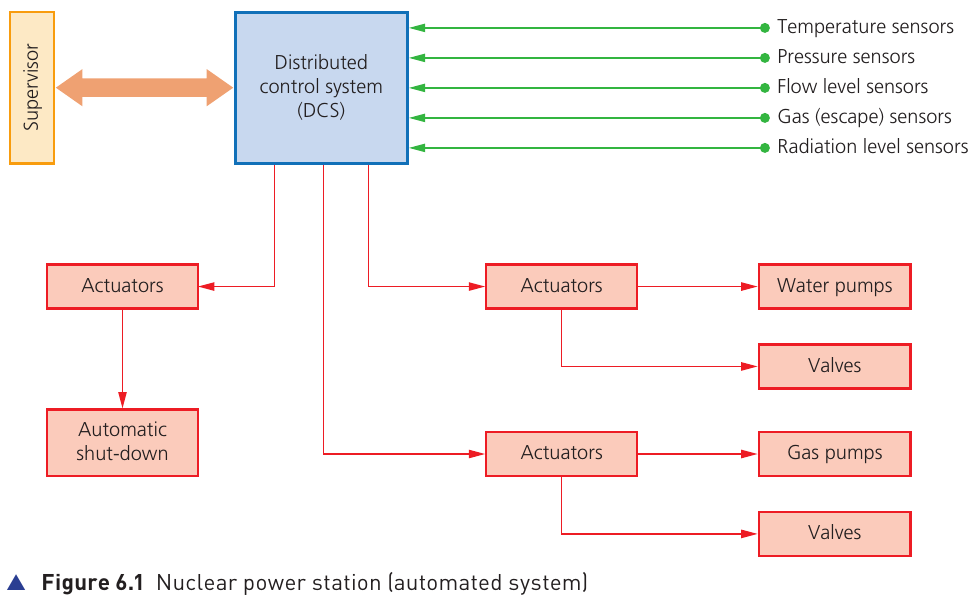
A distributed control system (DCS) receives data from temperature, pressure, flow-level, gas-escape and radiation-level sensors. Analogue readings are converted to digital form when required. The DCS compares the readings with stored operational data and parameters. If action is necessary, signals are sent to actuators that can operate valves, water pumps, gas pumps or an automatic shutdown system.
The process is automatic, but a supervisor can monitor it remotely and can override or shut down the process if necessary.
| Advantages | Disadvantages |
|---|---|
| Very fast response to abnormal readings | High initial cost and extensive testing |
| Improves safety and keeps workers away from dangerous areas | Unexpected conditions may not have been considered in testing |
| Small changes can be detected quickly, helping the process run near optimum conditions | Computerised control can still be exposed to cyber security risks |
| Lower long-term staffing costs for continuous monitoring | Enhanced maintenance can be expensive |
Example 2: Manufacture of paracetamol
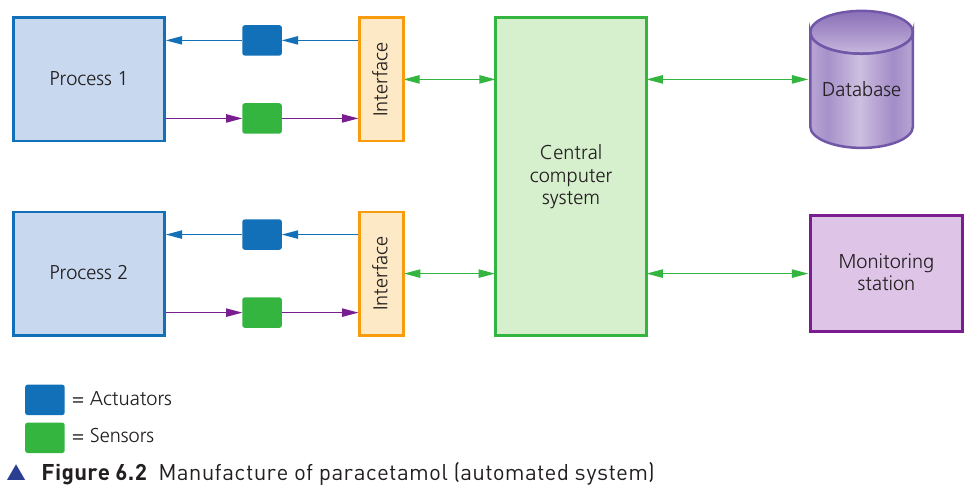
The first process manufactures the medicine and the second forms the tablets. Sensors monitor both processes and send readings to a central computer. The computer checks the data against stored parameters and controls actuators operating equipment such as pumps, valves, heaters, stirrers and pistons. A remote monitoring station allows an operator to supervise and override the system.
As well as speed, safety and reduced staffing, the source highlights more efficient use of materials, higher productivity and more consistent results. The main disadvantages are the high setup and maintenance costs, the possibility of untested conditions and cyber security risks.
Applying the same idea: automated bottling
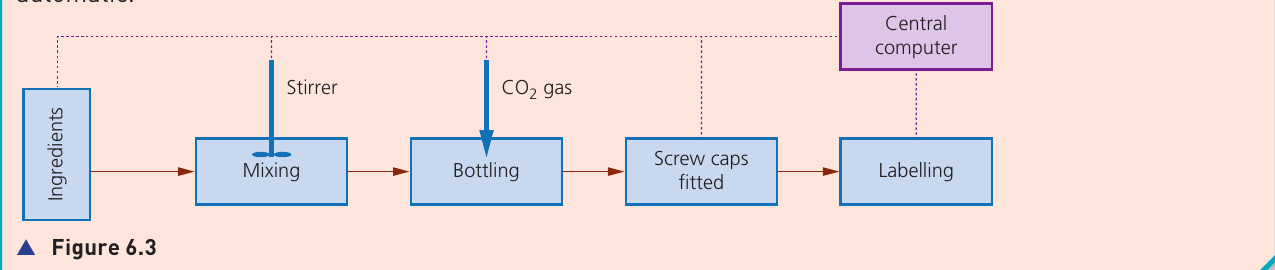
In a bottling plant, sensors can check the amount of each ingredient, the quantity of drink placed in each bottle and the carbon-dioxide level. A central computer processes the readings and actuators can operate a stirrer, valves and other machinery. This is the same sensor–processor–actuator pattern as the industrial examples above.
Transport
Automated transport is not limited to driverless vehicles. Conventional trains, cars and aircraft also contain automated control systems. The source gives the example of an automatic train safety system: track-side sensors provide information to the on-board computer and actuators can apply the brakes if the driver passes a stop signal. Aircraft autopilot can automatically control wing flaps, throttle and rudder to maintain height, speed and direction.
Example 3: Self-parking cars
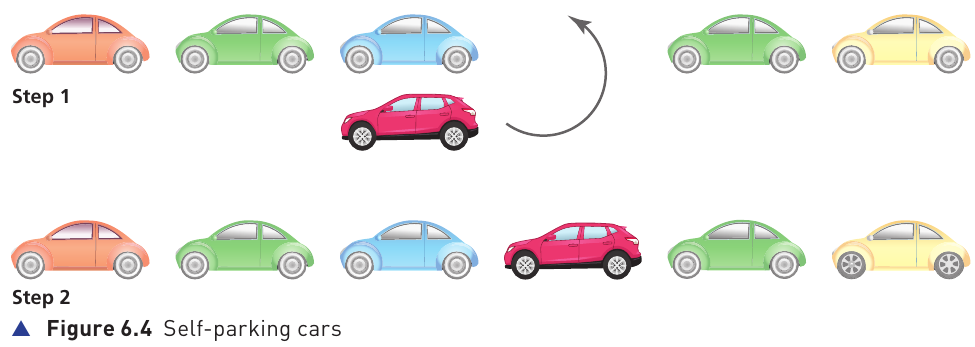
Sensors and cameras first judge whether a parking space is large enough. After the driver selects automatic parking, the on-board computer controls actuators connected to the steering, brakes and throttle. Sensors in the bumpers transmit signals and receive the reflections. The computer uses the return time to determine the position of nearby objects and build an understanding of the car’s surroundings.
Some cheaper or older systems automate only the steering, leaving the brakes and throttle under driver control.
| Advantages of self-parking | Disadvantages of self-parking |
|---|---|
| Cars can fit into smaller spaces and parking may be quicker | Drivers may become over-reliant and lose parking skills |
| Less traffic disruption while a driver searches/manoeuvres into a space | Dirty or faulty sensors/cameras can provide incorrect data |
| Fewer scratches and dents | Low kerbs may not be detected reliably |
| Sensors can stop the manoeuvre when a new obstacle appears | The equipment is expensive and needs additional maintenance |
| Consistent results | It may add cost without directly saving the driver money |
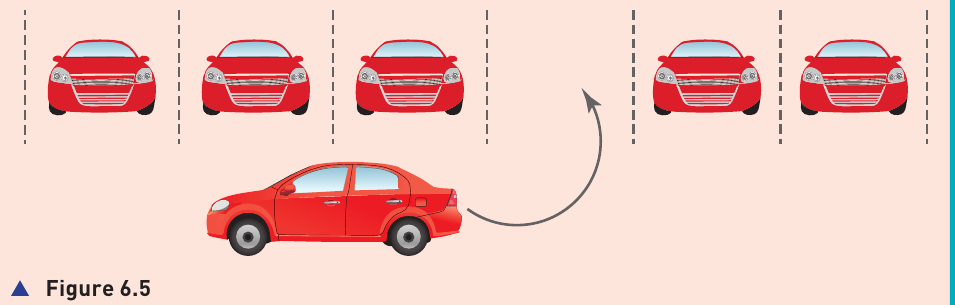
For perpendicular parking the system also needs information about the side boundaries/parking lines and the position of the neighbouring vehicles. Cameras or suitable proximity/distance sensors can provide the extra information.
Example 4: Adaptive cruise control
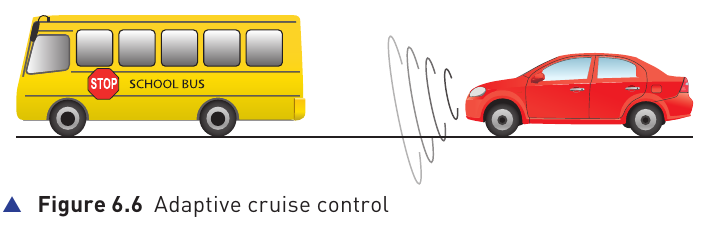
The driver chooses a cruising speed. Distance sensors in the vehicle repeatedly send signals towards the vehicle ahead and receive the reflections. The on-board computer uses the return time to calculate the separation between the vehicles.
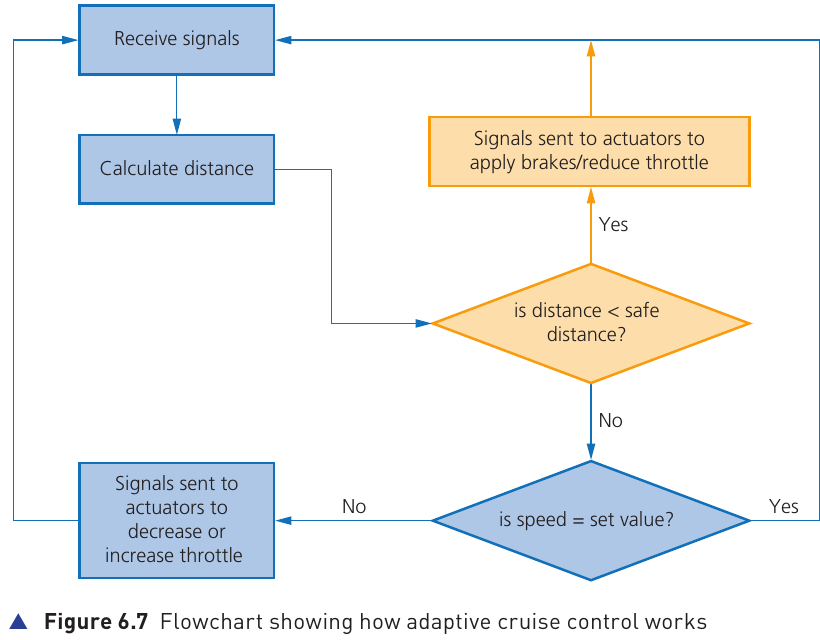
- If the measured distance is below the safe distance, the processor sends signals to actuators to apply the brakes and/or reduce the throttle.
- If the distance is safe, the processor checks the current speed against the driver’s set speed.
- If the speed differs from the set value, the throttle is increased or decreased through the actuator system.
- The system continually receives new sensor readings so the control loop repeats.
The source activity links the safe distance to stopping distance, which rises as speed increases. An automated system therefore needs both the measured gap and the vehicle’s speed when deciding whether braking is required.
Agriculture
Large agricultural areas can be difficult and expensive to monitor manually. Automated systems can collect sensor data over wide areas and control equipment remotely.
Example 5: Automatic irrigation in Brazil
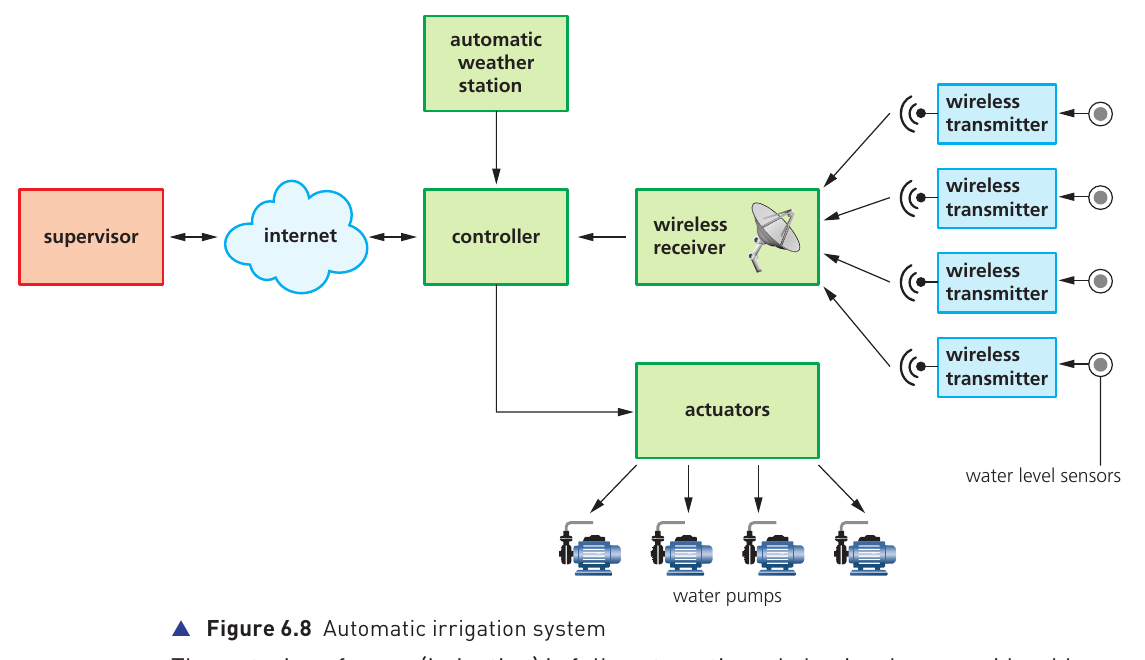
An automatic weather station sends data to the controller at regular intervals. Water-level sensors in irrigation channels send their readings through wireless transmitters to a receiver and then to the controller. The controller combines the channel readings with weather data and decides whether water pumps should start or stop. It sends output signals to actuators that operate the pumps. A remote supervisor can monitor several systems and override a controller when necessary.
| Advantages | Disadvantages |
|---|---|
| Lower labour costs over very large areas | High initial equipment cost |
| Faster and more efficient control of irrigation | Maintenance is expensive and may require specialist technicians |
| Better management of water resources | Water channels still need physical maintenance; a blockage may not be detected by the automated controller |
| Safer than frequent manual checks in very hot or risky environments | Remote locations can make repairs more difficult |
| Different crops can be given different programmed conditions at the same time | Incorrect or missing sensor information can lead to unsuitable watering |
Weather stations
An automated weather station can collect continuous data in remote places. The source lists a thermometer for temperature, anemometer for wind speed, hygrometer for humidity, barometer for air pressure, level sensor for rainfall and light sensor for hours of daylight.
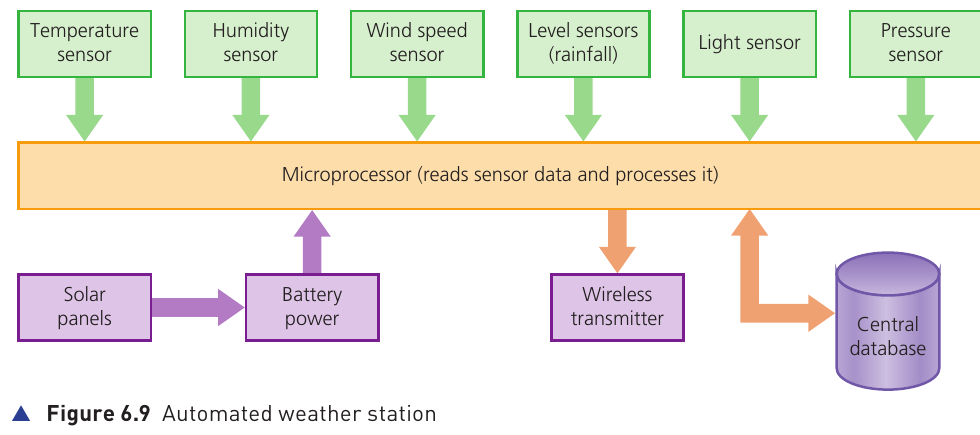
The microprocessor receives the sensor data, calculates values where necessary, and stores results in a central database. Some stations near airports can automatically send frequent reports to aircraft. The textbook’s tipping-bucket rain gauge uses an actuator-controlled piston to tip collected rainwater into a vessel where its level can be measured.
Gaming
Gaming systems use sensors to make interaction more realistic. Accelerometers detect acceleration, deceleration and tilting of the controller/device. Proximity sensors can detect the position of a hand or finger near a touch surface. Together with a microcontroller, these sensors allow a player’s physical movement to influence the game and create a more immersive experience.
Lighting
Automatic lighting can use light sensors to respond to ambient brightness, motion sensors to detect people, and infrared sensors for movement/security detection.
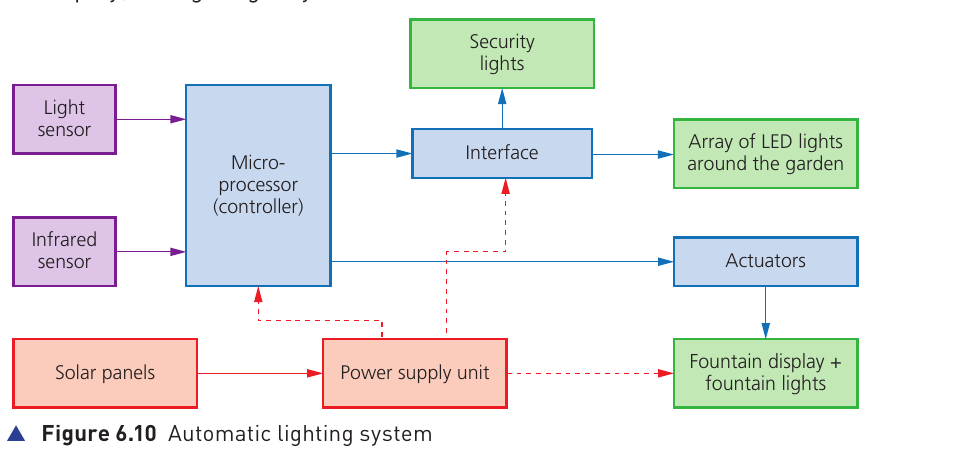
In the source example, when it becomes dark, the microprocessor controls LED garden lights and can start a programmed fountain-light display. An infrared sensor can provide security information. The fountain itself is controlled by actuators that switch pumps on and off according to the program.
| Advantages | Disadvantages |
|---|---|
| Automatic control of lighting | High setup cost |
| Lower energy use because lights operate only when needed | Wireless links can be less reliable than wired links |
| Wireless installations can avoid trailing cables | More maintenance may be needed to keep the system reliable |
| Longer lamp life through dimming or automatic switching | Maintenance can add ongoing cost |
| New programmed light displays can be created for different occasions |
Science
Automated scientific systems are particularly useful when experiments require accuracy, repeatability, continuous monitoring or work with hazardous materials.
Example 7: Automated chemical process in a laboratory
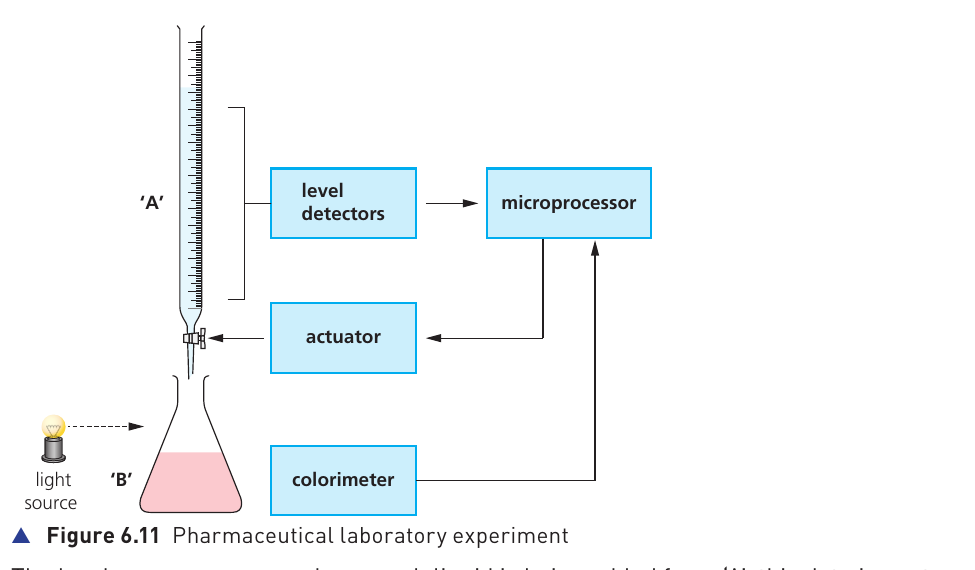
One chemical is added from a burette into a reaction vessel. Level detectors measure how much liquid has been added and a colorimeter checks the colour of the reaction mixture. Both readings are sent to the microprocessor. The processor controls the burette tap by sending signals to an actuator, stopping the flow when the programmed conditions have been reached.
| Advantages | Disadvantages |
|---|---|
| More consistent and repeatable results | Less flexible than a skilled human technician in unusual situations |
| Safer when hazardous chemicals are involved | Security risks exist if experimental data is shared globally |
| Several experiments can run at the same time, producing faster results | Equipment can be expensive to purchase and set up |
| Results can be analysed automatically | |
| Fewer highly trained staff are needed for each individual experiment | |
| Experiments can be monitored remotely in real time |
Automated systems using AI
The source finishes 6.1 by noting that some industrial and scientific automated systems also use artificial intelligence. Potential advantages include access to very large quantities of facts, the ability to learn from amounts of data that would take humans far longer to analyse, and the ability to identify patterns that humans might miss. The cautions given are that the required human skill set changes and the AI depends on the quality and suitability of the data used to train it.